It started with a screening that fell through and two beers that didn't.
A few years ago the filmmaker Pierre Corbin passed through Warsaw hoping to show his film, The Great Reset and the Rise of Bitcoin. The screening didn't happen. He and a local Bitcoiner, Tomek Kolodziejczuk, went for a drink instead, and somewhere in that conversation the obvious idea surfaced. There's more than one Bitcoin film out there. Gather them. Screen them. Pick the best.
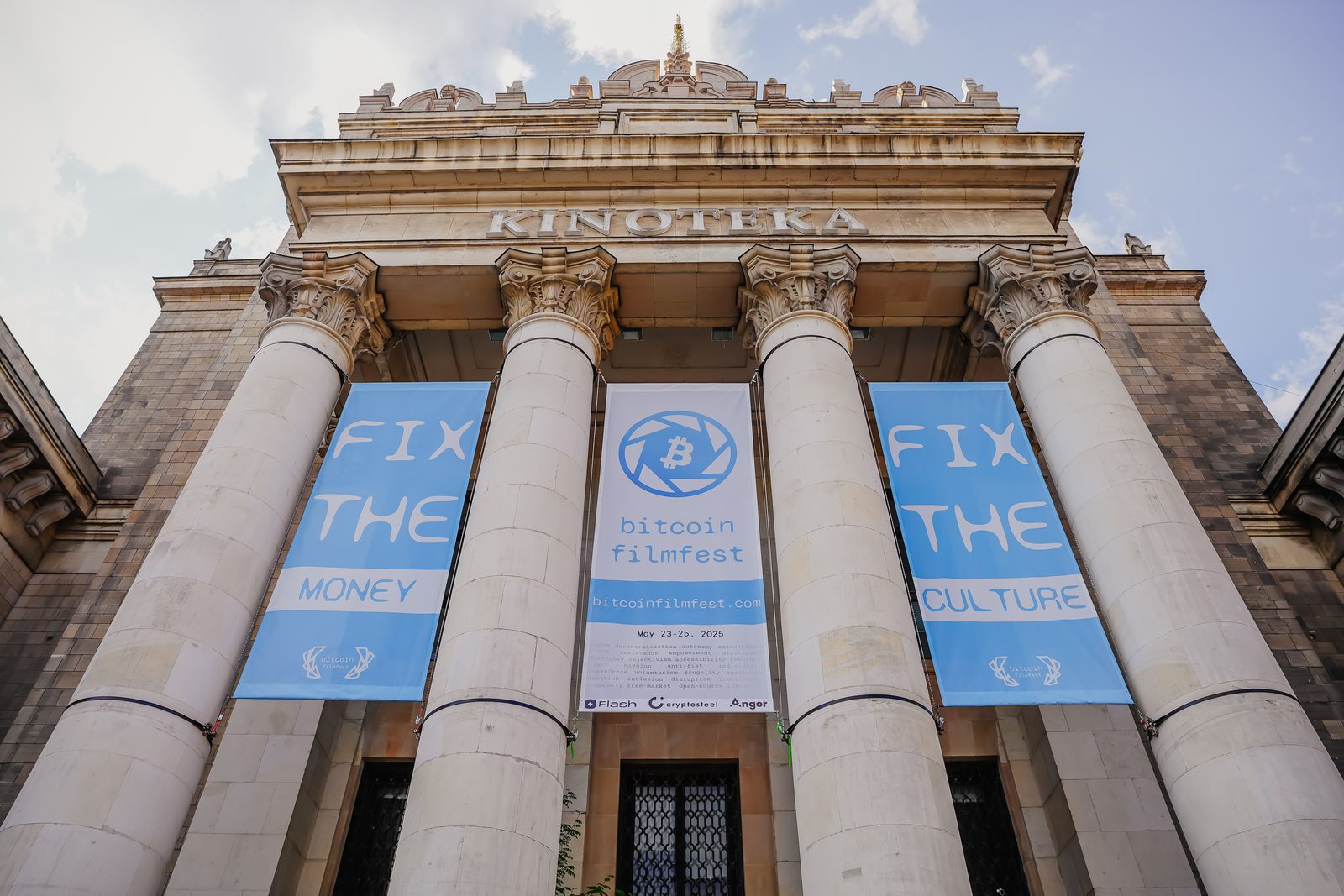
The first edition ran as a side event to a gathering called Weekend of Capitalism — 120 people, eight films, all documentaries. It went better than anyone expected, so they did it again, and again. Bitcoin FilmFest 2026, running June 4–7 at Kinoteka in Warsaw, is the fourth edition. By now it's less an event than an annual reunion of a worldwide group of friends who happen to like films.
🎬 What it actually is
Call it a film festival and you're half right. The team is more precise: a festival of Bitcoin culture built around cinema. The films are the spine. Everything else is the body — workshops, panels, live music, painters and photographers showing work, a community stage, morning yoga, a Bitcoin Run and a Bitcoin Walk along the Vistula, a trip to a shooting range, a visit to the Photoplastikon, Warsaw's museum of antique cinema technology.
A day has a shape. Mornings are breakfast and workshops. Afternoons are roughly five hours of screenings — features, shorts, panels — across three stages this year: film, community, and a Monero stage. Evenings are the after-party. Most nights there's an after-after. The festival's own phrase for it is "intensive chill."
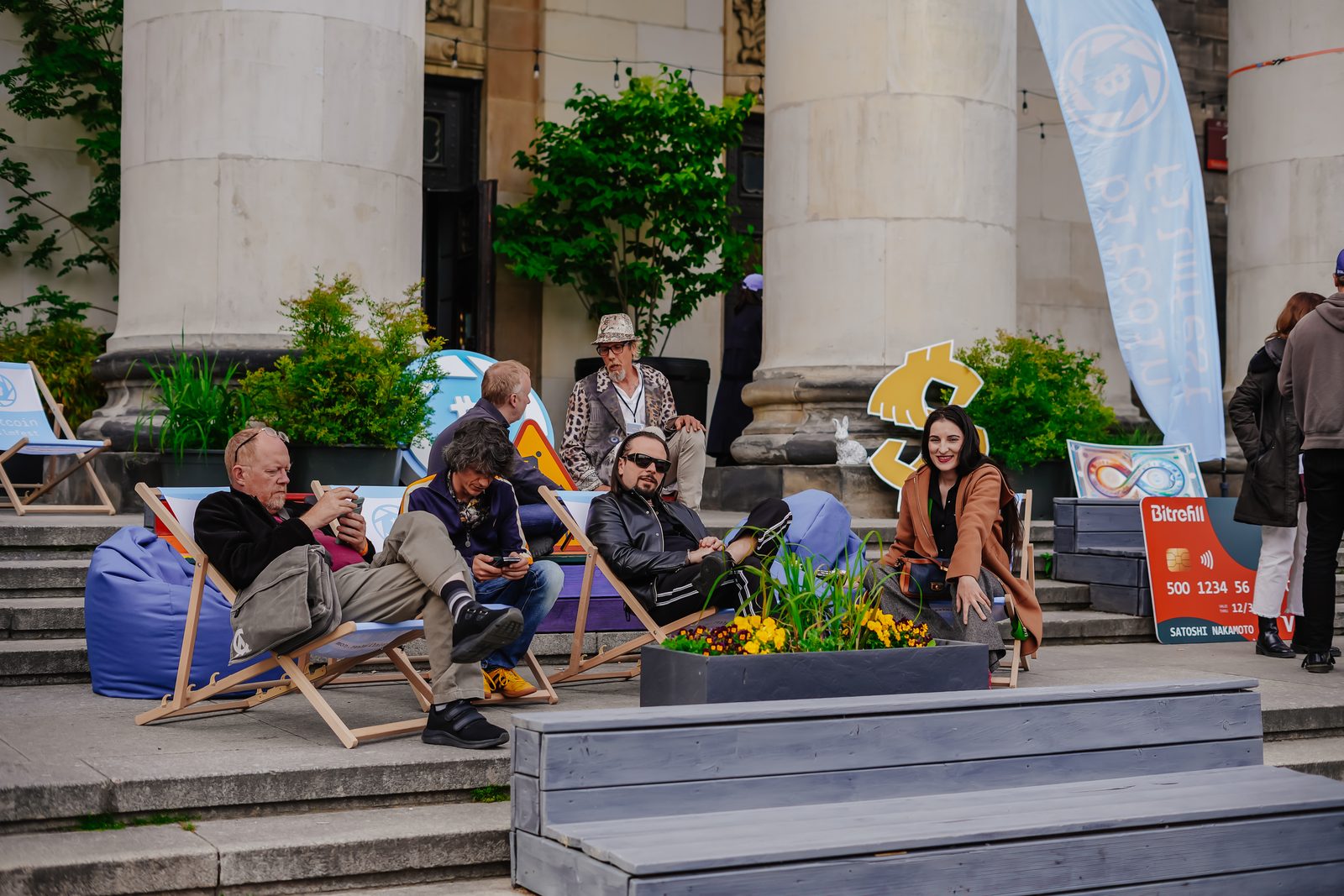
The crowd is the point. Strong Polish, German, Czech and British turnouts; guests from Thailand, Honduras, New Zealand. Hardcore Bitcoiners and total newcomers — about one in ten attendees just wandered in curious and left knowing what the fuss is about. Producers and investors come too, which quietly makes the festival a marketplace: a place to fundraise a film, or pitch an idea to someone who might back it. No VIPs, no name-dropping. "Everyone is important at our event," Kolodziejczuk says. Last year drew 200-plus guests from more than 20 countries. This year they expect 200 to 300.
🆕 What's new in 2026
MoneroKon comes to town. The biggest addition is a co-located conference. MoneroKon travels to a different city each year, and 2026 puts it in Warsaw: same dates, same venue, shared parties, agendas built not to clash. One ticket covers both events, in either direction. MoneroKon isn't really about Monero, the BFF team is quick to say. It's about access to private, permissionless money, and about half its programme touches Bitcoin directly. BFF itself stays Bitcoin-only. The co-location is about overlapping people, not blended brands.
An AI contest with real sats behind it. Cinema is among the industries AI is reshaping fastest, and BFF decided to pull up a chair rather than watch. This edition runs AI filmmaking workshops where attendees build shorts on-site, plus the Future of Money AI contest with a 2.5 million sat prize pool, voted by the festival audience and announced at the Sunday closing gala. The team is honest that it's an experiment. They also think it's where things are headed.
A bigger, looser lineup. 21 titles this year (18 in the cinema, 3 VOD-only) — out of roughly 30 submitted — and the number keeps climbing. The fix for the stage time that runs out: every film also goes to VOD through the festival's partner IndeeHub, so a ticket holder who misses something in the cinema can still catch it at home. The 2026 programme leans toward small, independent creators over big productions — that creator shift again, the one AI keeps accelerating.
A few to watch. Self Custody is likely the highest-budget film in the selection, a 31-minute Hollywood action-thriller having its European premiere here, with Adrian Grenier. Bitcoin Castle and Crypto Castle are short comedies that poke at Bitcoin culture from the inside. Hummingbird — The Bitcoin Jungle Story is the feature-length documentary anchor — Costa Rica's grassroots Lightning economy in 75 minutes. And Bitcoin Motorcycle Diaries, a Bitcoin Video Magazine 'videozine' from the global Bitcoin road, screens a short on-stage chapter at the festival with the full edition on VOD after. The winners take home Golden Rabbits, BFF's own awards, judged this year by a jury that includes Brad Mills, Terence Michael, Avi Burra and Pierre Corbin.
Music runs through all of it: a concert from the multi-instrumentalist Roger9000, a set from the Madeira-born artist DOT Dominus, local DJs through the nights.
One more thing about the ticket. It's €120, paid in Bitcoin. Every year BFF sends attendees home with merch and gadgets from its friends worth more than that. This year every ticket buyer gets a Trezor Model T hardware wallet. As Kolodziejczuk puts it, even if you only want the Trezor and never show up, the ticket pays for itself.
👋 Why come in person
You could watch the films online. The festival has VOD. But that misses what the festival is for. Many of these films are full of inside jokes a newcomer won't catch first time through, and the festival is the one place the person next to you is happy to explain. Most of the real thing happens between screenings anyway — in the lobby, at the bar, on the walk — where people swap ideas, find collaborators, make friends.
Ask past attendees and they say the same thing. "I came for two films and stayed for four days," says Patryk, who came to BFF'25. "By Sunday I had three new collaborators and a list of movies I'd never have found on my own." Ernesto, another guest, puts it this way: "I flew in not really knowing what 'Bitcoin cinema' meant. I left understanding it — not because someone lectured me, but because I watched it, argued about it over beers, and danced to it at 2am."
There's a reason the founders keep saying "the power of friendship." BFF runs on a tight budget and a lot of goodwill. It barely covers its costs. It exists because a group of people in Poland and beyond — founders Tomek Kolodziejczuk and Pierre Corbin, crucial team members Kasia Szczypska, Selale Malkacoglu, Blazej Szkudlarek, Florina Mahalean and Nomishka Dilshan, and a small army of volunteers — decided culture is worth a few months of their year. "Bitcoiners don't only exist in front of screens," Kolodziejczuk says. "We're a network of friends. Come and feel that you're not alone."
The venue makes the case on its own. Kinoteka sits inside Warsaw's Palace of Culture, a vast building that once stood for a system imposed on Poland from outside. For four days in June it's handed to the most freedom-loving, decentralised culture you could put inside it. The founders find that both funny and fitting. So will you, probably, somewhere around the third afterparty.