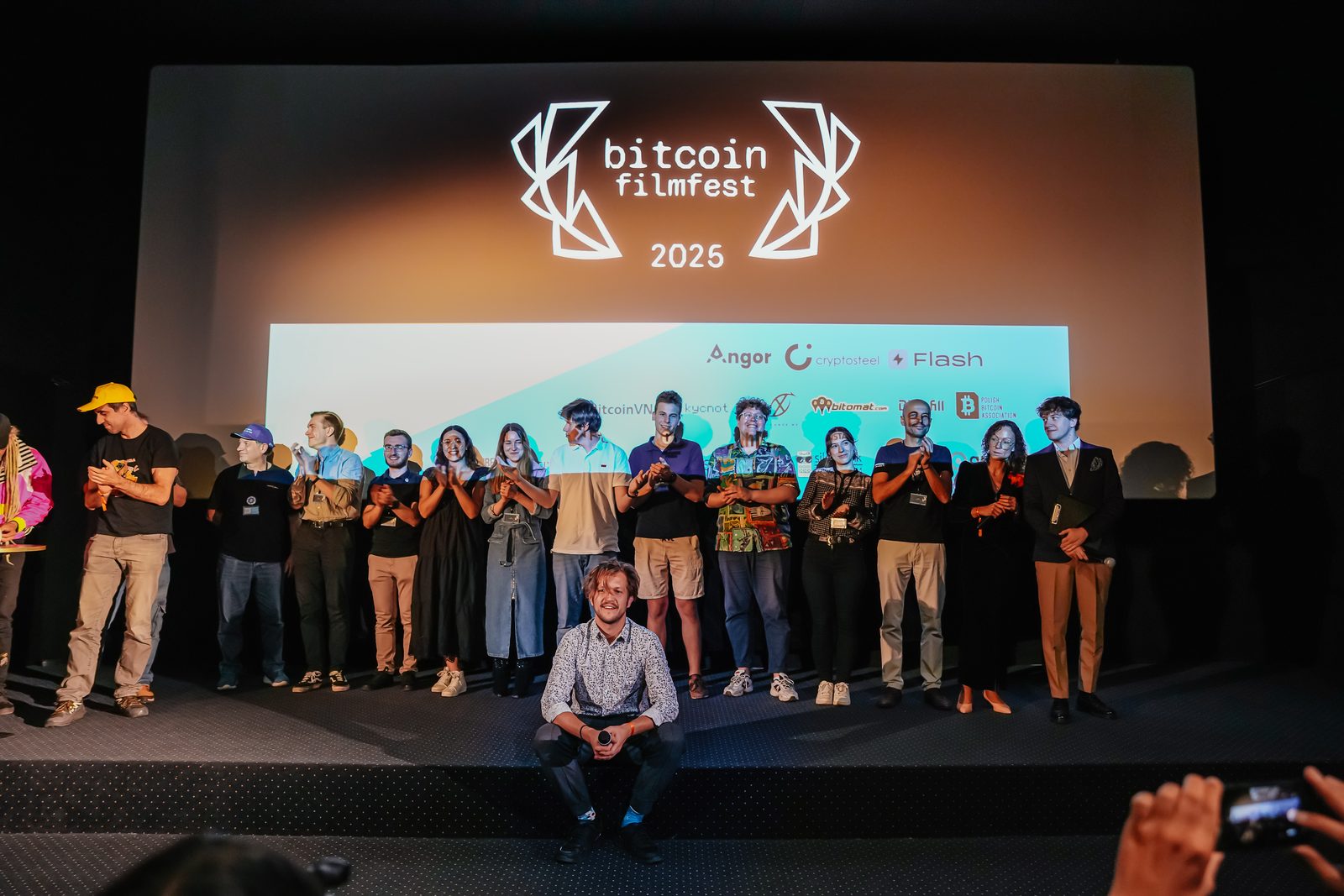
It happened over two beers. Pierre Corbin, a filmmaker friend, was visiting Warsaw and wanted to screen his film, The Great Reset and the Rise of Bitcoin. The screening fell through. So we got a drink instead and started talking, and it became obvious there's more than one Bitcoin film out there. Maybe we should make an event, screen several of them, choose the best. The first one ran as a side event to Weekend of Capitalism — 120 people, eight films, all documentaries. The quality was better than anyone anticipated. So we did it again.
It became a community. That's the real change. The first year it was an idea we were testing. Now people love it, they come back, they bring friends. The films changed too. That first year was all documentaries, and documentary is still our most common genre, but now there's AI fiction, comedy, drama. We experiment every year. We've done self-defence workshops, storytelling workshops, our own pitch studio, live concerts. Every year more artists come who aren't filmmakers at all — musicians, painters, photographers. It's really a festival of Bitcoin culture that happens to be built around cinema.
It's the most common question we get. And the answer is, it's a category, like sports films or religious films. Most of our films are about Bitcoin directly. But many are regular movies — a romance, a comedy, a crime story — where Bitcoin is just an important part of the plot. And then there are films that never mention Bitcoin and were made long before it existed, like The Matrix or The Truman Show, but they're Bitcoin films in their values. Self-actualisation. Independence. An anti-systemic view of the world. We didn't invent this category. We're discovering it, shaping it, every year.
Because we love it, and because it's the most powerful medium for the imagination. With a film you can inform, you can motivate, you can inspire. You can tell stories that are true, stories that are fictional, and stories that are yet to become true. Bitcoin won't be adopted just because we build better wallets, or easier wallets, or even better legal frameworks. There has to be a cultural shift, toward freedom, independence, honesty, voluntary collaboration. You can't fix the world with technology alone. You have to work on the culture in parallel.
That the world's problems have a root cause. We need to fight the cause, not the symptoms. Bitcoin FilmFest is about cultural evolution, about the significance of the Bitcoin subculture. It's not about investment, it's not about money. It's about a freedom revolution.
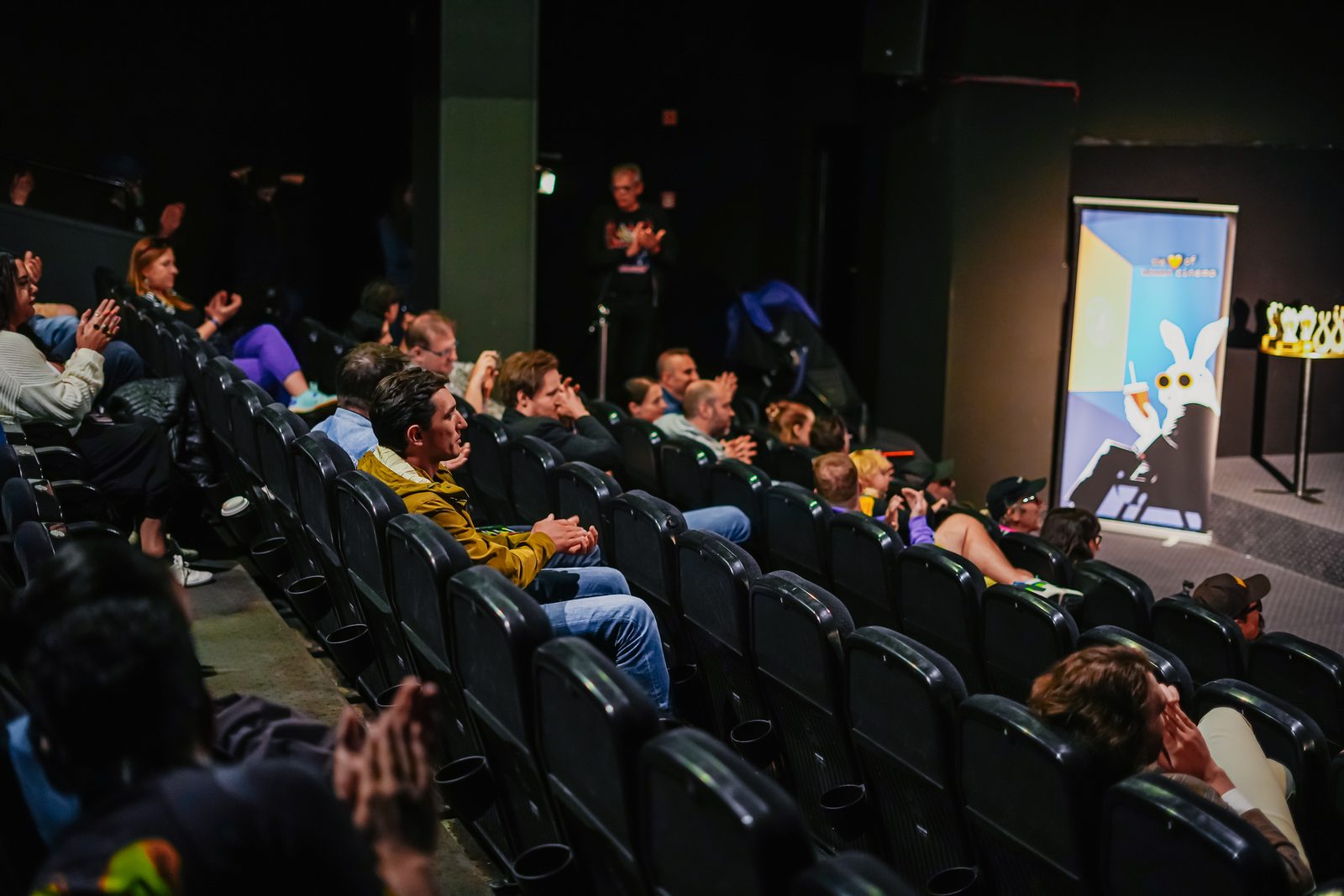
There's no ideal attendee. We welcome technologists, artists, families, hardcore Bitcoiners, complete beginners — all of them. Every year about ten percent of the room is people who just wandered in, curious, and they leave knowing what Bitcoin is because of us. The festival is for you even if you think it isn't. Even if you don't know Bitcoin and don't want to learn it, you'll feel the vibe. It's a festival about decentralised, permissionless culture, about freedom of speech, about staying loyal to the truth.
The 2024 halving. Nobody knows exactly when the halving block gets mined, and it happened exactly during our festival, right after we'd screened a psychedelic, surrealist film — Gods of Their Own Religion. It became like a New Year's Eve. The whole room counting down together to a new era of Bitcoin. We projected the Bitcoin logo onto the Palace of Culture — tens of thousands of people in Warsaw saw it live, hundreds of thousands online. The report went viral. You can't plan a moment like that. It just landed in our laps.
Warsaw is the centre of Europe, easy to reach, a beautiful and dynamic city with real history, including cinema history. And we partner with Kinoteka, the best festival cinema in Poland, which is very friendly to Bitcoin. As for the building — the Palace of Culture was once a symbol of communism, of an occupation imposed on Poland after the war. And now, for a few days, it's occupied by the most freedom-loving, decentralised culture you could possibly put inside it. That's good symbolism.
None. People involved in Monero have been our guests for years. MoneroKon travels to a different city each year, and this year it's Warsaw, so we made it work: same dates, same venue, shared social events, one ticket gets you into both. MoneroKon isn't really a conference about Monero. It's about access to private, decentralised, permissionless money, and about half its programme is Bitcoin. Its audience might be even more idea-driven than at other Bitcoin conferences. Bitcoin FilmFest itself stays Bitcoin-only. The co-location is about the people overlapping, not the brands.
A genuine bet. Cinema is one of the industries AI is transforming the fastest, and we want a seat in that revolution, not a view from the back. So this year we run AI workshops where attendees create short films on the spot, and an AI contest, Future of Money, with a 2.5 million sat prize pool, voted on by the audience. It's an experiment. But AI opens up creativity. It lets people who could never make a movie before become filmmakers. That's worth taking seriously.
Because that's literally what runs it. This is a side project for us. It barely covers its costs — we do it for the love of the game. It works because of friends, in Poland and outside it — my co-founder Pierre, our crucial team Kasia Szczypska, Selale Malkacoglu, Blazej Szkudlarek, Florina Mahalean and Nomishka Dilshan, and the volunteers, who are the real power of the festival. We're a grassroots event. No booths, no expos, no big mining companies. Low budget, great vibes. A completely different feeling from the huge events. We don't want to stop. We want to keep doing this, year after year.
Come anyway. You can watch our films online — we have VOD — but Bitcoiners don't only exist in front of screens. We're a network of friends. Come to Warsaw and feel that you're part of something, that you're not alone. The films will do the rest.