The map of the Bitcoin world is well known. Big conferences in the United States, banking-and-regulation panels in Switzerland, adoption experiments in El Salvador, developer gatherings scattered across Asia and Europe. The common denominator: almost all of these events speak the language of technology, markets or politics. The stages belong to programmers, investors and entrepreneurs.
There is, however, one group nobody built a home for over the years: creators. Filmmakers shooting documentaries about inflation in Argentina and fictional thrillers about lost seeds. Musicians, painters, animators, authors. People who don't write code or manage portfolios, but who make the stories that let the rest of the world understand what this is all about.
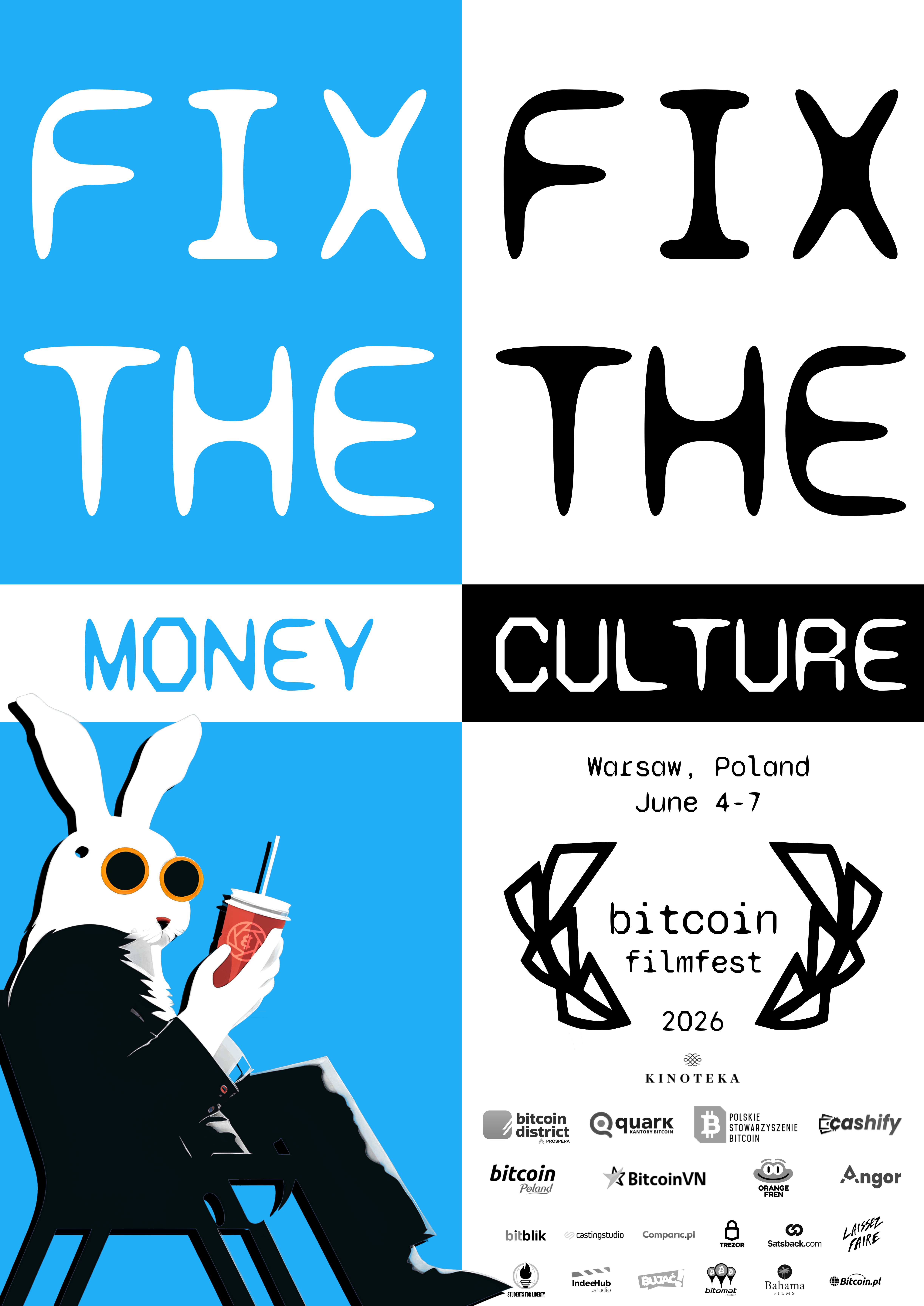
Their home stands in Warsaw. It's called Bitcoin FilmFest.
🍺 It all started over two beers
In 2022, the filmmaker Pierre Corbin, long tied to the Bitcoin scene, was visiting Warsaw. A planned screening of his film The Great Reset and the Rise of Bitcoin didn't come off. Instead of a screening, there was a conversation over two beers — between Corbin and Tomek Kołodziejczuk, an activist who had been building Poland's Bitcoin community for years. The takeaway was simple: if there's more than one film about Bitcoin, you could show a few, invite people and pick the best.
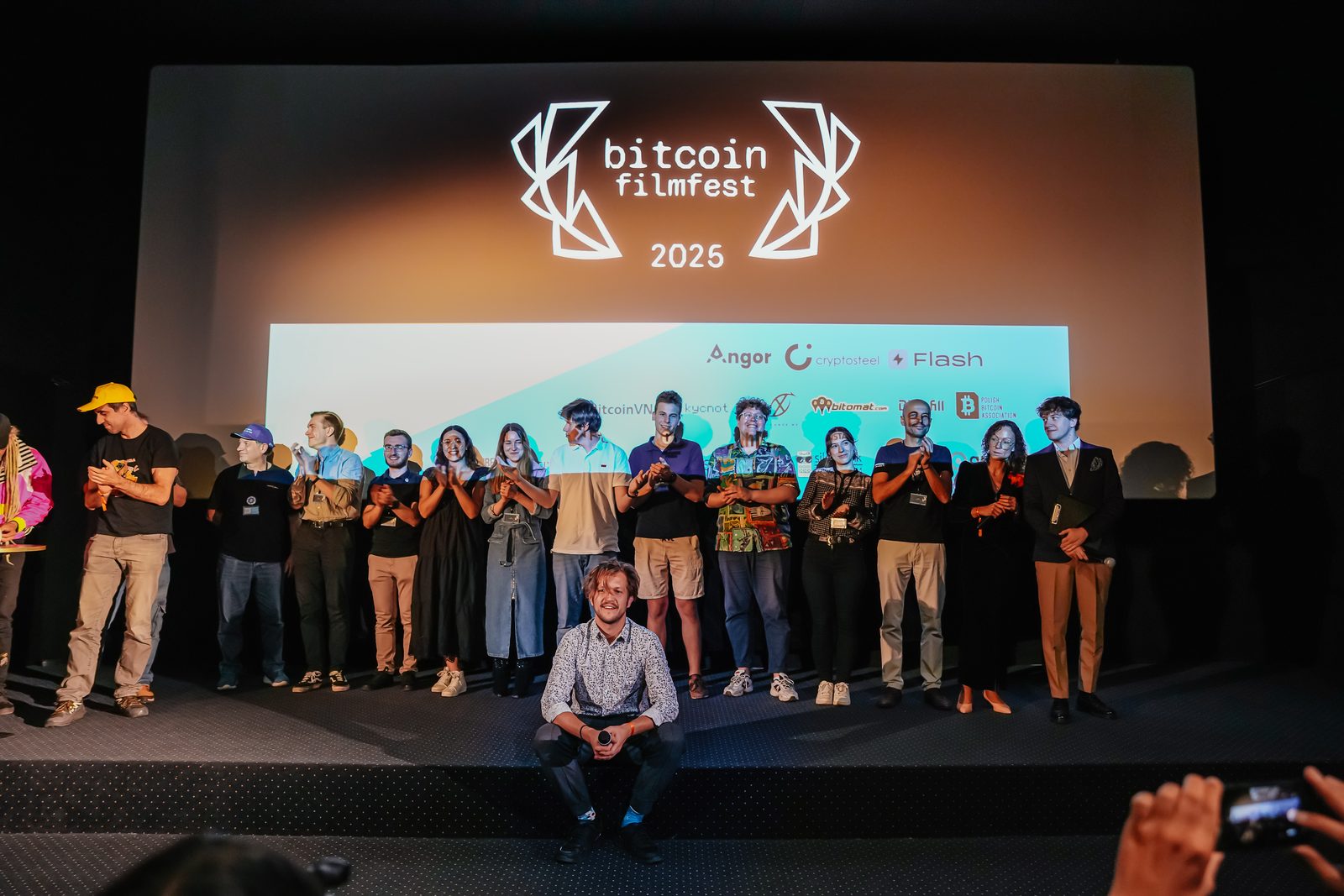
The first edition, organized as a side event to a Warsaw conference, drew around 120 people and eight films. The fourth edition, in June 2026, was already 21 titles, guests from more than 20 countries — from Germany and the Czech Republic to New Zealand, Thailand and Honduras — and its own awards gala. Along the way the festival ran smaller "mini" editions in Lisbon, Cape Town, San Salvador and Lugano. But the centre stayed where it all began.
🎭 A festival, not a conference — on purpose
The difference isn't cosmetic. Bitcoin FilmFest deliberately rejects the industry-conference format: no expo halls, no booths, no VIP zones, no corporate logos on every wall. Supporters are called "friends", not sponsors. The event keeps an intimate scale of 200–300 people — and treats that as a feature, not a limitation.
"We don't have a VIP culture. Everyone matters. This event runs thanks to friends, volunteers, artists, sponsors and people who simply want this culture to exist," says Tomek Kołodziejczuk, the festival's co-founder.
The programme also looks different from a conference agenda. Alongside the film blocks: morning yoga in Saski Park, a Bitcoin Run along the Vistula, workshops on building Lightning Piggy Bitcoin piggy banks, an AI film hackathon, evening concerts and riverside dancing. People come for the films — and come back for the people.
🐇 A subculture with its own awards and symbols
Maturing subcultures are recognized by the institutions they create. Bitcoin Cinema already has its own: the Golden Rabbits, the only film awards in the world given directly to Bitcoin cinema. The statuette — shaped like rabbit ears, a nod to the White Rabbit you follow down the rabbit hole — goes each year to the makers of the best film, short and story. Winners use the festival laurels on their posters and trailers, exactly as one does in the "grown-up" film industry.
"Every legendary film award once started as something small. The Golden Rabbit is still young, but in the world of Bitcoin cinema it can become a very important mark of quality," says Kołodziejczuk.
The subculture also has its shared memories. The loudest was made in 2024, when the Bitcoin halving — a moment whose exact date can't be planned — happened to fall during the festival. The audience counted down block 840,000 like a Bitcoin New Year, and the Bitcoin logo was projected onto the Palace of Culture and Science, visible to thousands of Varsovians. The images went around the world's media.
🏛️ The Palace of Culture as a punchline
You couldn't ask for a better set. A festival of one of the most decentralized cultures of our time takes place at Kinoteka — a cinema housed in the Palace of Culture and Science, a building that for decades symbolized central planning and top-down power.
"There's something beautiful about a festival of Bitcoin culture taking place in a building that once symbolized central authority. For a few days it's taken over by one of the most freedom-minded, decentralized cultures in the world," says Kołodziejczuk.
🇵🇱 Why it happened here
Poland has a strong, grassroots Bitcoin community — maximalist meetups, book translations, its own conferences — and a long tradition of distrust toward centralized institutions, backed by the experience of hyperinflation in the 1980s and '90s. It's the soil in which a cultural, rather than purely financial, approach to Bitcoin takes root unusually well.
The 2026 edition — with the European premiere of the thriller Self Custody, the investigative documentary Finding Satoshi, an AI film contest with a 2.5-million-satoshi pool and the co-located MoneroKon conference — shows that a project born over two beers has become a fixture on the cultural map of the Bitcoin world. At a time when ever-larger conference halls compete for the industry's attention, the most interesting things in Bitcoin culture are happening in a cinema in the centre of Warsaw.
And that is perhaps the best answer to the question of where the centre of Bitcoin subculture lies. Wherever that network meets, once a year, in person.